Topic 5: BULLION
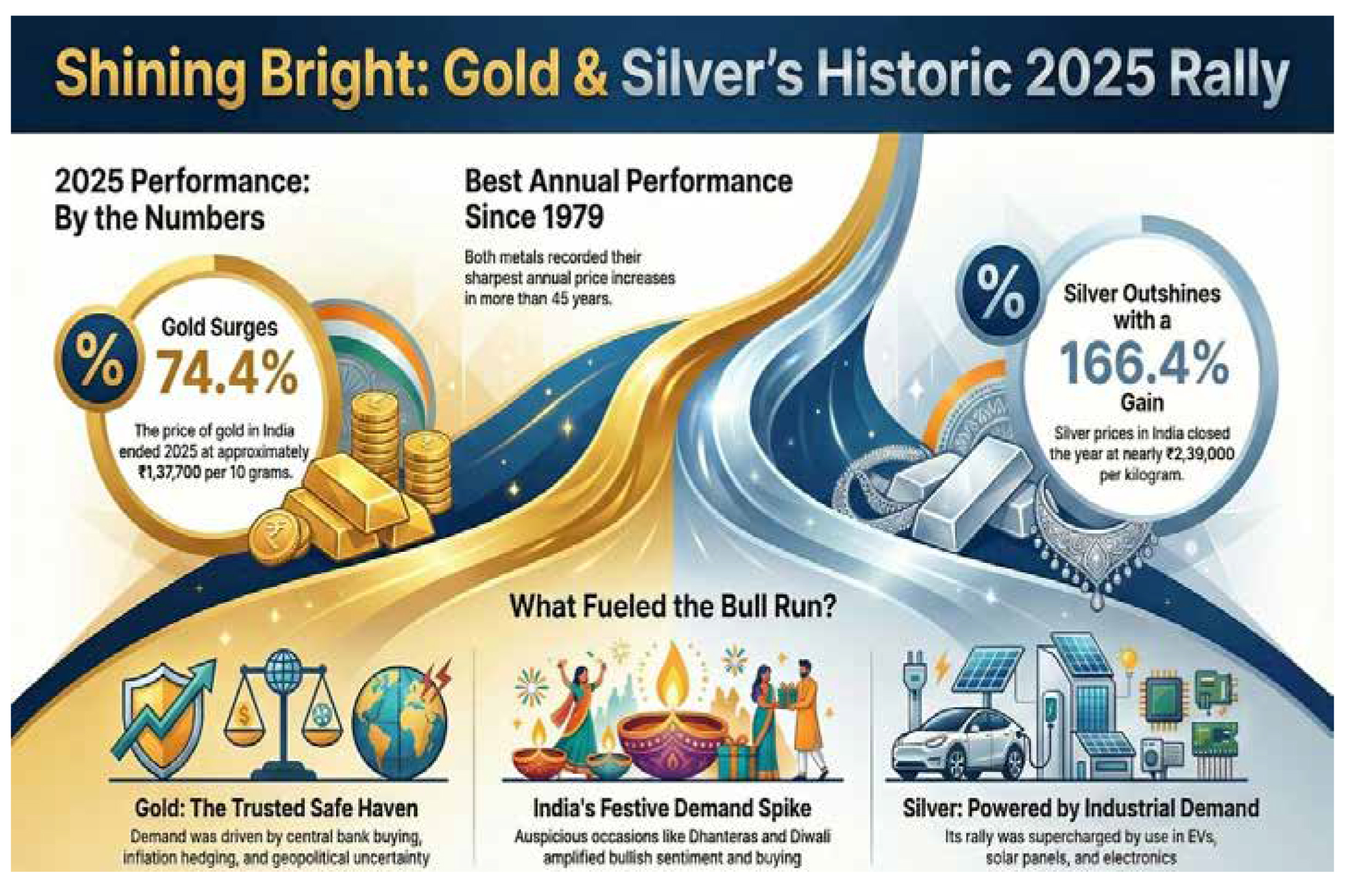
Gold and silver prices in India remained elevated through
most of December 2025, supported by a mix of global
safe-haven demand, currency effects and central bank
buying, before correcting sharply in the final days of the
month as profit-taking and year-end rebalancing set in.
Domestic 24K gold traded comfortably above the
₹14,000 per gram mark for much of the last week of
December, touching highs near ₹14,242 per gram on
December 27–29, but momentum faded quickly
thereafter. Prices fell to around ₹13,620 on December 30
and settled near ₹13,588 by December 31, marking a
steep decline of about 4.5% in the final stretch of the
month. Correspondingly, 22K gold ended December near
₹12,455 per gram and 18K around ₹10,191. Silver
followed a similar pattern, rising earlier in the month on
safe-haven inflows before softening toward the end as
risk appetite improved in equities and speculative
positions were unwound
The late-month correction was primarily driven by
aggressive profit-booking after a strong rally. Gold had
posted substantial gains earlier in the year, leaving prices
technically overbought, with momentum indicators such
as the relative strength index moving above 70. This
prompted traders and investors to lock in profits,
especially as the calendar year drew to a close. In India,
physical demand also tapered after the Diwali and
wedding-season peak, reducing support from jewellery
buying and encouraging dealers and investors to offload
holdings as part of tax planning and portfolio
rebalancing. Similar dynamics were visible globally,
where COMEX data showed speculators trimming long
positions after year-to-date gains of more than 25%,
reinforcing the downward pressure into month-end.
Despite the correction, gold’s broader tone in December
remained resilient, underpinned by geopolitical and
macroeconomic uncertainties. Early in the month,
heightened tensions in the Middle East, continued risks
around the Russia–Ukraine conflict, and intermittent
friction involving Venezuela and US sanctions injected a
risk premium into bullion prices, briefly pushing global
spot gold above USD 4,400 per ounce. These
developments supported safe-haven flows into
gold-backed ETFs and sustained central bank interest.
Global spot prices, while volatile, still ended December up
around 3% on a monthly basis, easing from late-month
highs to about USD 4,330 per ounce by early January
2026.
Currency movements played a critical role in shaping
domestic prices. The sharp depreciation of the Indian
rupee toward ₹90.8 per US dollar amplified local gold
prices through most of December, effectively adding an
import premium even when global prices softened. This
currency effect helped insulate Indian gold prices from
sharper declines earlier in the month. However, strength
in the US dollar, with the dollar index holding above 108,
capped international gains and eventually contributed to
the late-month pullback in ounce-denominated prices.
Falling crude oil prices helped ease import costs but
were insufficient to offset the combined impact of
profit-taking and stronger dollar dynamics.
Central bank buying remained a structural support.
Ongoing purchases by the RBI and other major central
banks, including China, reinforced gold’s role as a
long-term store of value amid de-dollarization trends and
geopolitical uncertainty, even as short-term momentum
faded. Overall, December 2025 for gold and silver was
characterized by a classic pattern of early resilience
followed by a sharp technical correction, leaving bullion
prices lower at the margin but still elevated in a broader
historical and strategic context heading into 2026.